
The practice owner’s internal monologue is usually the same: We need to take security more seriously. I just do not know where to start, and I cannot afford to hire someone. That hesitation is understandable. It is also expensive.
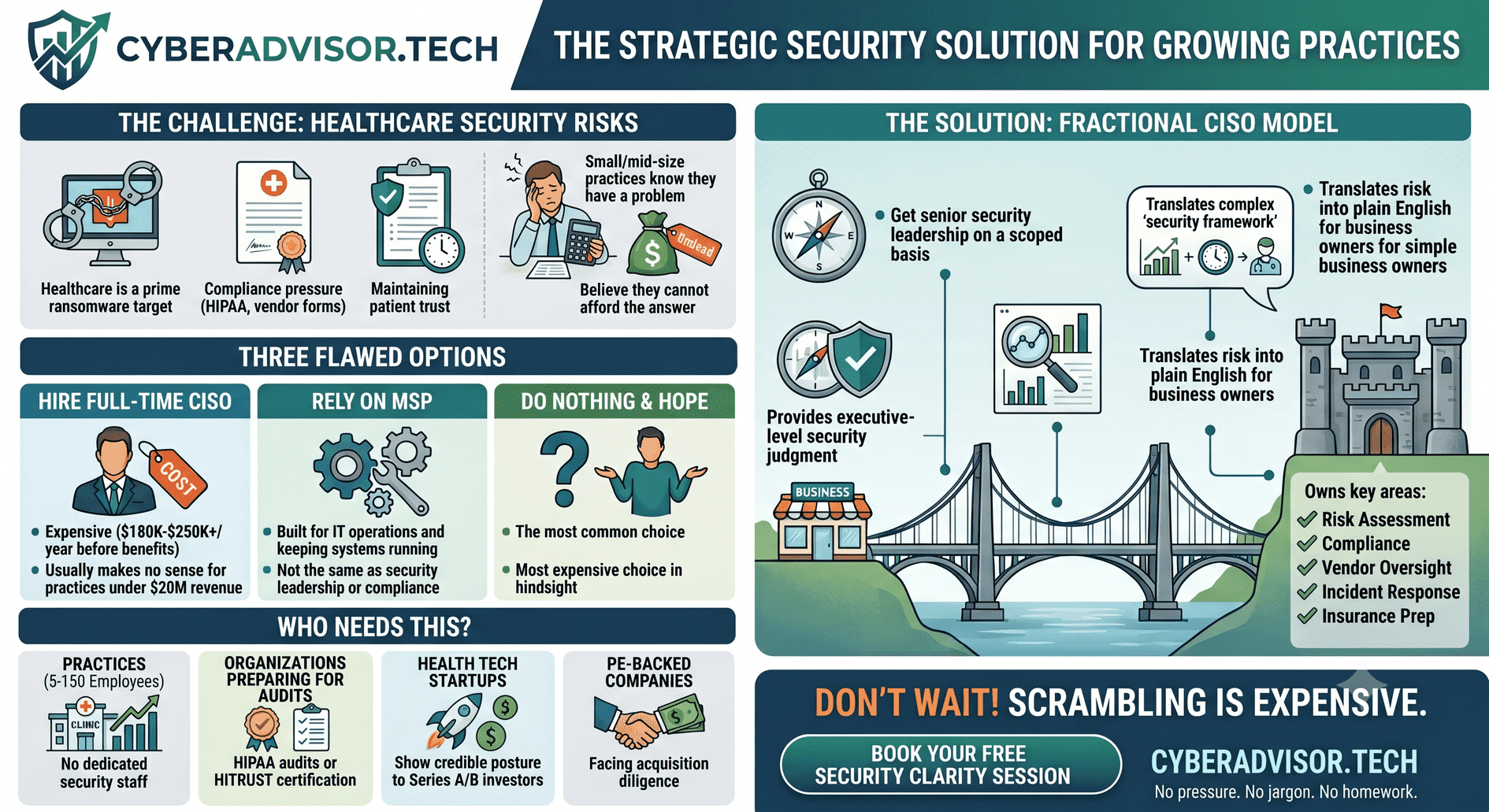
Healthcare is still one of the most attacked sectors for ransomware, and the pressure is not limited to attackers. HIPAA, cyber insurance renewals, vendor questionnaires, and patient trust all pile up at once. Most small and mid-size practices are stuck between knowing they have a problem and believing they cannot afford the answer.
Most owners end up choosing from three paths. None of them are good.
The problem is structural, not moral. A small practice does not need a Fortune 500 security department. It does need executive-level security judgment.
A fractional CISO is not a cheaper version of a full-time hire. It is a different model. You get senior security leadership on a scoped basis, priced for organizations that need serious governance but do not need a permanent executive on payroll.
That person leads the security conversation. They help with risk assessment, compliance program design, vendor oversight, incident response planning, cyber insurance preparation, and board or leadership reporting. They do the work an MSP usually cannot do because the MSP’s job is to support systems, not to help leadership decide how much risk the business should carry.
This model is becoming standard in other parts of business. Fractional CFOs became normal for growth-stage companies because finance did not need a full-time executive every day, but it did need one at the right moments. Security is getting there now. Healthcare is one of the reasons why.
“Executive-level” should not be a fancy title. It should mean outcomes.
It means translating risk into plain English that a practice owner, COO, or PE partner can act on. It means building a security program that can survive OCR scrutiny, satisfy cyber insurers, and hold up in due diligence. It means someone is leading the work, so the owner is not carrying it alone in the back of their mind while trying to run payroll, billing, staffing, and patient care.
That difference matters. A security vendor sells a product. A security advisor helps the business make decisions. Those are not the same service, and pretending they are is how organizations waste money on controls they do not need while missing the ones they do.
This is where the model becomes practical. If you have ever run a business as both CEO and CISO, you know security decisions never happen in isolation. They happen inside a budget. They happen inside staffing limits. They happen inside growth plans and acquisition timelines.
Most security people talk in frameworks and risk scores. Practice owners talk in revenue, time, and patient outcomes. The fractional CISO model works because it meets owners where they are, not where a checklist wishes they were. That is the difference between advice that sits in a binder and advice that changes behavior.
I have seen this from both sides. Security stops being theoretical when you are the one responsible for keeping the business alive while still meeting regulatory expectations. That tension is real. And it is exactly why fractional leadership works.
This is the right fit for organizations that are too small for a full-time security executive but too exposed to keep winging it.
That last one matters more than people admit. That hesitation is usually the signal.
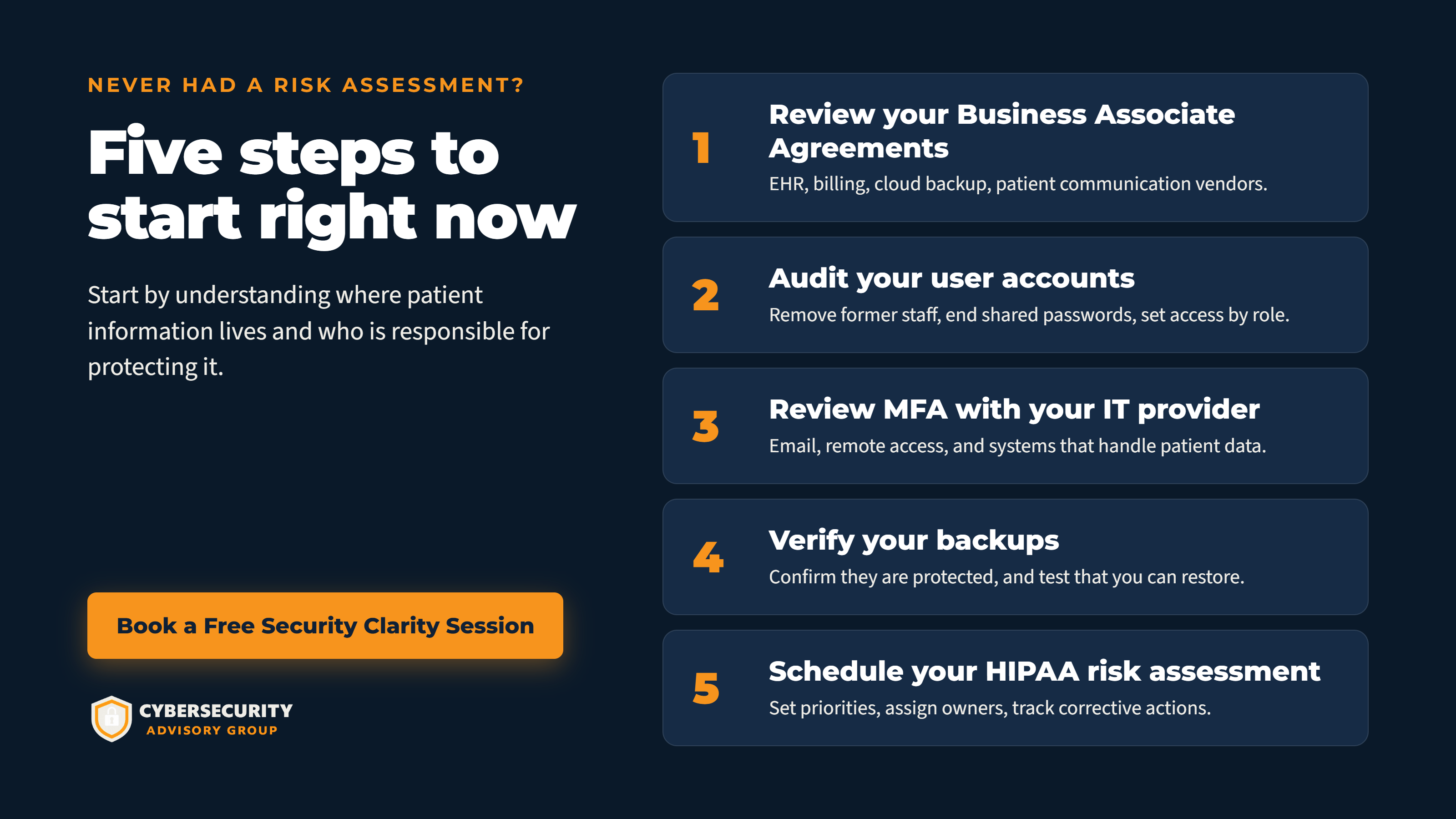
A real fractional CISO engagement starts with a gap assessment. Where are you today. Where do you need to be. What is missing. What is actually urgent. No drama. No scare tactics.
From there, the work becomes scoped and concrete. That can mean a retainer for ongoing advisory support or a project engagement for a specific need like insurance renewal, audit prep, or incident response planning. Good engagements use fixed fees, defined deliverables, and direct access to a senior advisor. Not a junior associate reading from a template.
The goal is not dependency. The goal is a program that can stand on its own after the work is done. If the structure requires permanent hand-holding, it is not a program. It is a crutch.
The practices that start now will be in a better position when the next HIPAA rule lands, when the insurer asks harder questions, or when a patient asks how their data is protected. The ones that wait will scramble. Scrambling is expensive.
Owners do not need another software demo. They need clear responsibilities, clear priorities, and a security leader who can make the risk make sense. That is what a fractional CISO gives you.
Book a free Security Clarity Session at cyberadvisor.tech. No pressure. No jargon. No homework before we talk.
Connect with Melissa Thornton on LinkedIn